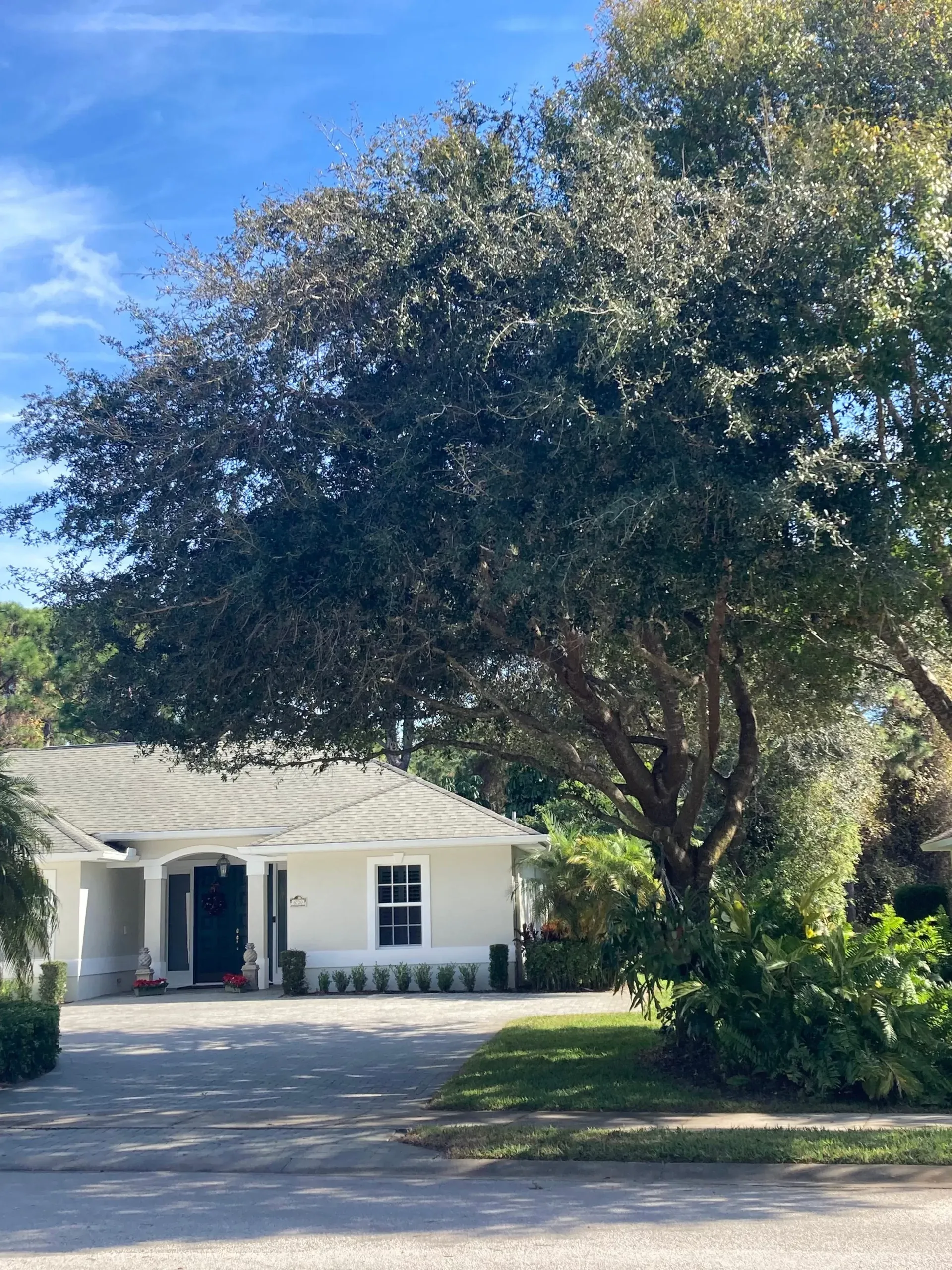
You drive through your neighborhood after a storm and see a big, full oak flat on the ground. The leaves were green. The canopy looked full. From the outside, that tree looked perfectly fine.
So why did it fall?
We get this question a lot from homeowners around Vero Beach. And the answer is almost never simple bad luck. There are real reasons healthy looking trees come down during storms here on the Treasure Coast. Most of those reasons are hiding underground or deep inside the trunk where you can’t see them.
Let’s break down what’s really going on.
Vero Beach Soil Doesn’t Hold Roots the Way You’d Think
One of the biggest factors is our soil. Most of Indian River County sits on sandy soil. Some areas closer to the coast have a mix of sand and shell. That type of ground drains fast, which is great for avoiding standing water. But it doesn’t give tree roots much to grip.
Compare that to clay heavy soil up north where roots can anchor deep and hold tight. Here in Vero Beach, roots spread wide but often stay shallow. When a strong gust hits during a summer storm or a hurricane, those shallow roots just can’t hold.
We’ve pulled up root balls on fallen trees that were barely two feet deep. The tree above looked healthy for years. But the foundation underneath was never strong enough for serious wind.
Root Damage You Can’t See
Roots get damaged in ways most homeowners never notice. Construction projects, new driveways, irrigation trenches, even heavy foot traffic near the base of a tree can compact the soil or cut through roots.
Over the years, we’ve seen trees that had root systems damaged five or ten years before they fell. The tree kept growing up top, but below ground, the roots were rotting or dying off slowly. By the time a storm rolls through, there’s not enough holding it in place.
If you’ve had any digging or grading done within about 15 feet of a large tree, that root zone may already be compromised.
Internal Decay Hides Behind Green Leaves
A tree can have a completely hollow trunk and still push out green leaves for a long time. That’s because the outer layer of the trunk, the sapwood, is what moves water and nutrients. The inner wood, the heartwood, is mostly structural support.
So when fungus, termites, or moisture get inside and start breaking down the heartwood, the tree keeps living on the outside. It still looks full and healthy. But inside, it’s lost a big chunk of its strength.
We’ve cut into trunks after storms and found nothing but soft, crumbling wood in the center. The homeowner had no idea. The tree looked great from the street.
Some signs of internal decay include mushrooms or fungal growth near the base, bark that peels off in large sections, and small holes where insects have been entering.
The Wrong Tree in the Wrong Spot
Some trees just aren’t built for our storm season. Vero Beach homeowners often inherit trees that were planted decades ago without much thought about wind resistance.
Laurel oaks are a common example. They grow fast, look great, and provide tons of shade. But they’re also known for weak wood and a short lifespan compared to live oaks. After 30 to 40 years, many laurel oaks start developing internal issues even if they appear healthy on the surface.
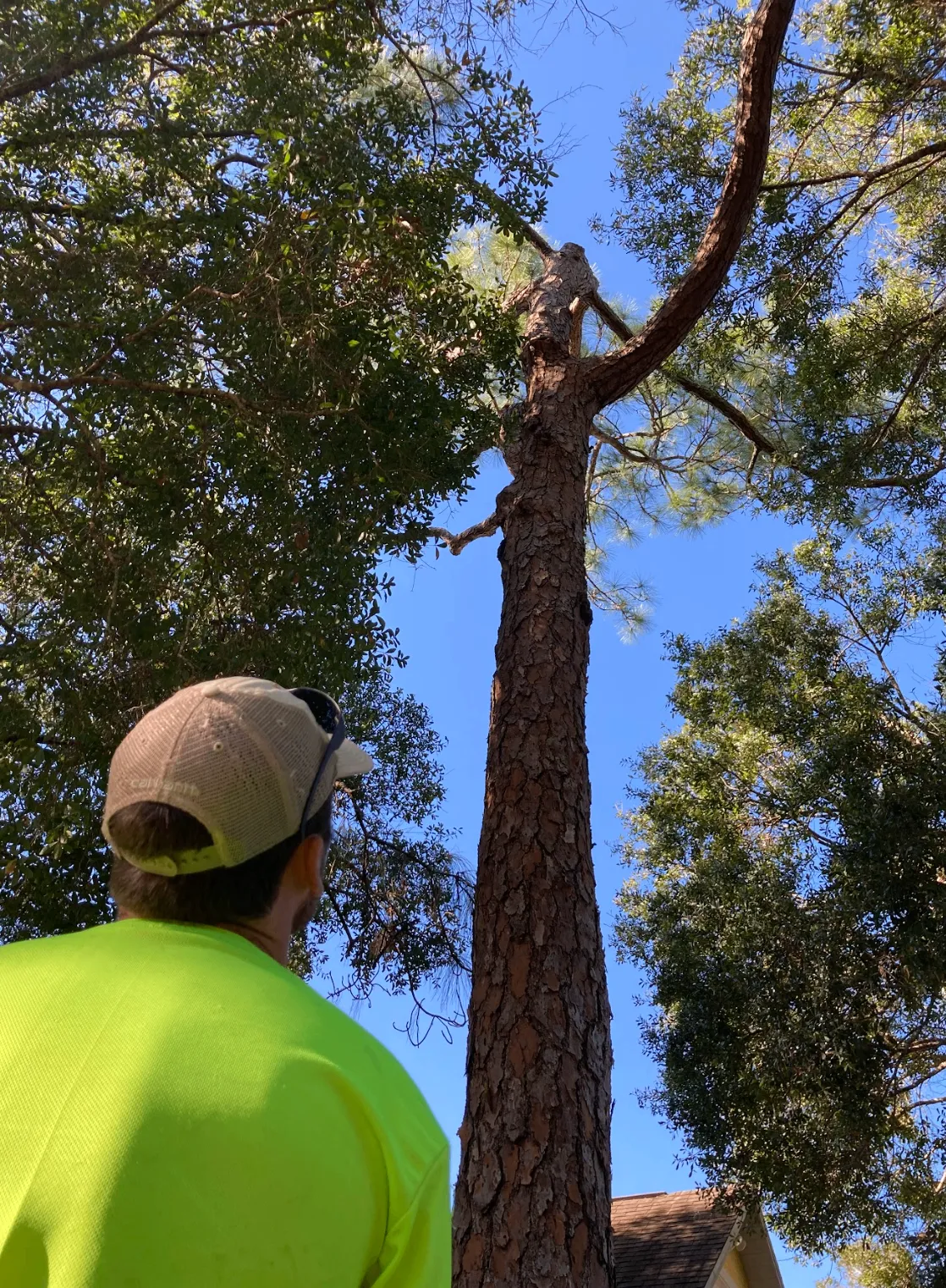
Norfolk Island pines are another one we see come down regularly. They’re tall, top heavy, and have shallow root systems. A strong tropical storm can snap them or pull them right out of the ground.
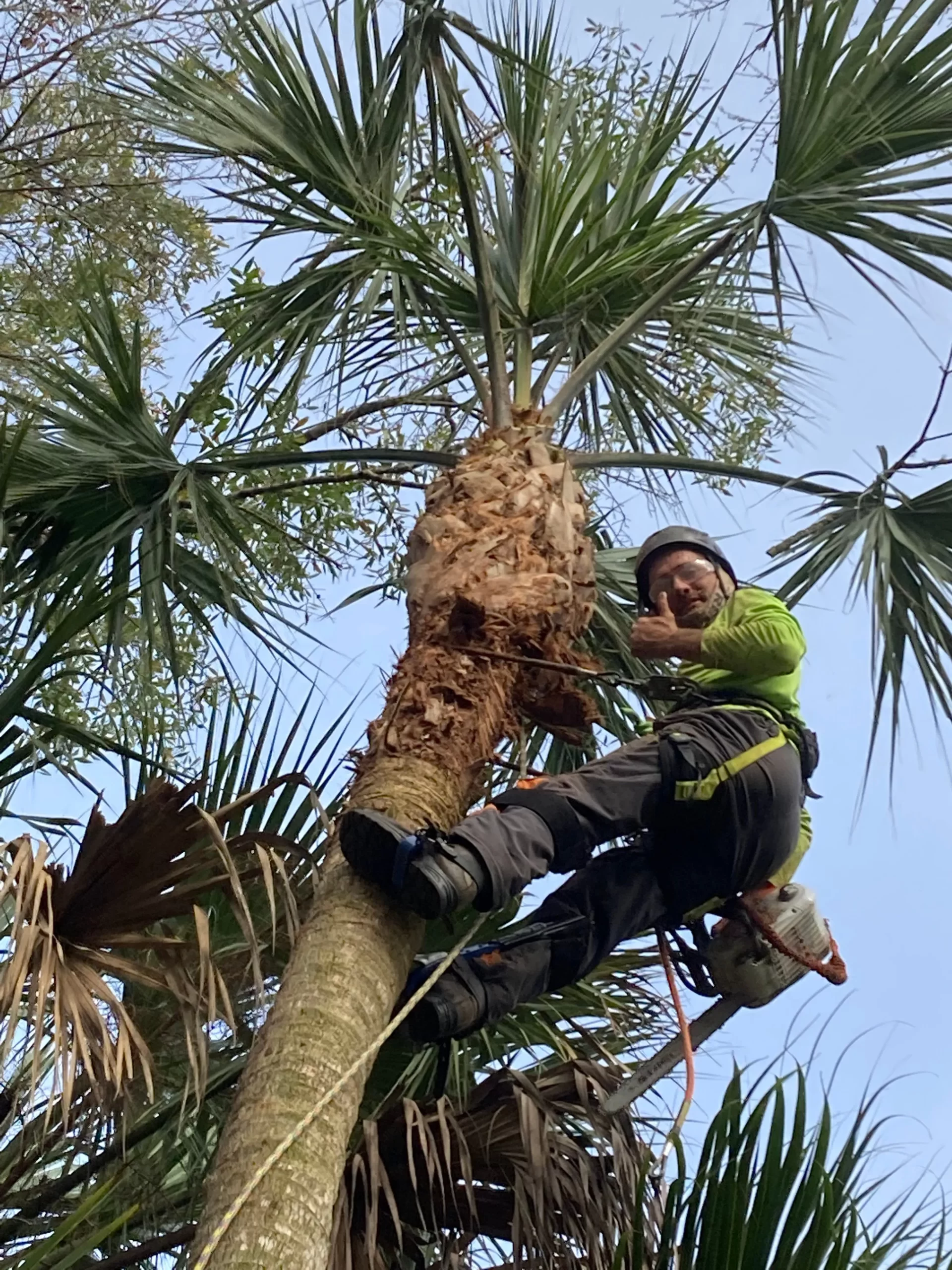
On the other hand, live oaks and sabal palms handle storms much better. They’ve adapted to coastal Florida conditions over a long time. If you’re planting new trees, choosing wind resistant species makes a real difference.
Overgrown Canopies Catch Too Much Wind
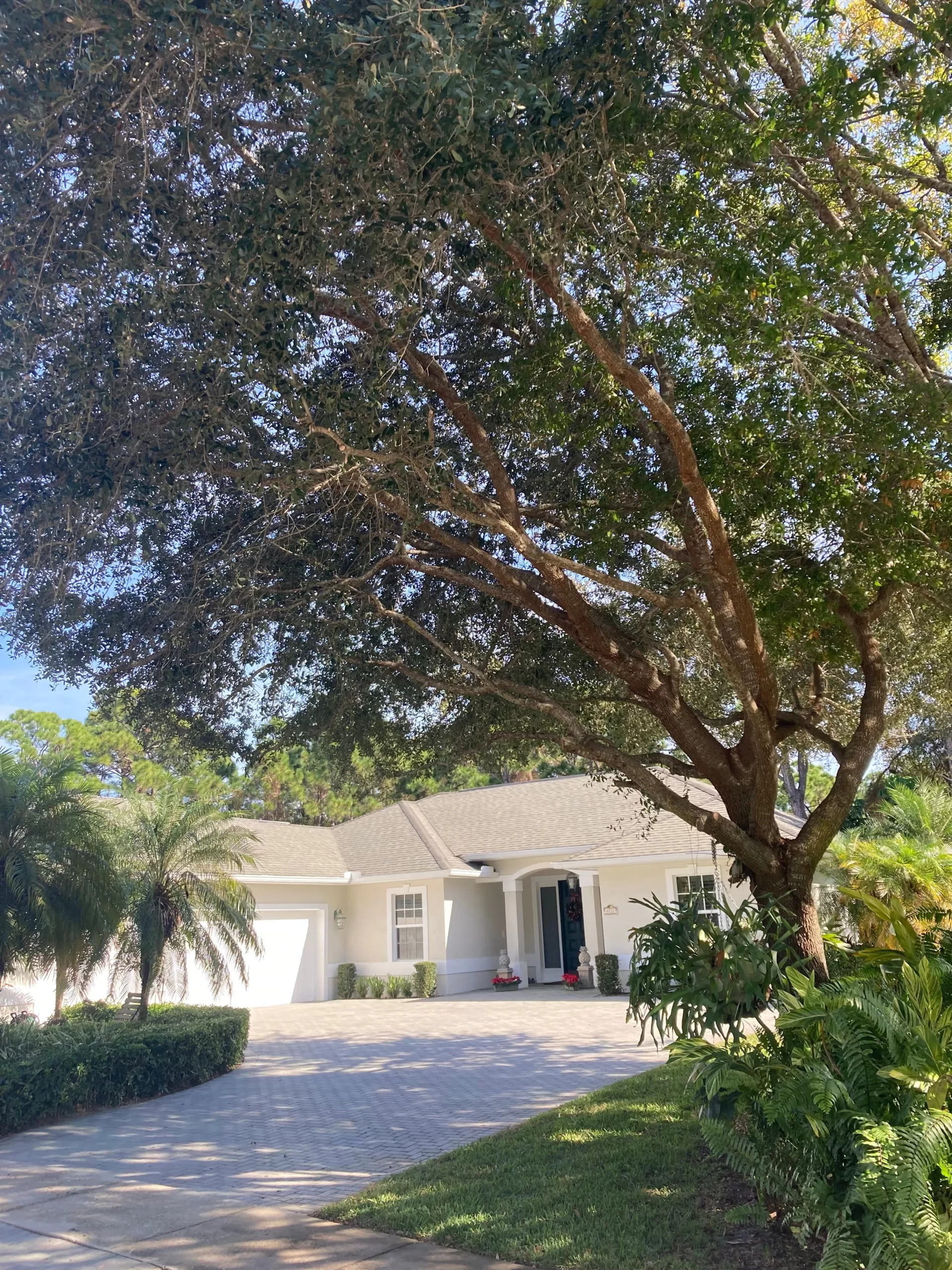
A thick, full canopy might look beautiful, but during a storm it acts like a sail. The more leaves and branches catching wind, the more force gets transferred down to the trunk and roots.
Trees that haven’t been trimmed or thinned in years are at higher risk. Proper pruning opens up the canopy so wind can pass through instead of pushing against the whole tree. This is one of the simplest things you can do to protect a tree before storm season.
We recommend homeowners in Vero Beach get their larger trees professionally trimmed at least once a year, especially before June when hurricane season starts. It doesn’t mean cutting the tree way back. It means strategic thinning that keeps the tree healthy and reduces wind load.
Saturated Ground Makes Everything Worse
Florida’s rainy season runs from about May through October. That lines up almost perfectly with hurricane season. So when a big storm hits, the ground is often already soaked from weeks of afternoon rain.
Saturated sandy soil holds tree roots even less than dry sandy soil. The water loosens everything up. Add 60 or 70 mile per hour gusts on top of that, and you’ve got the perfect setup for a tree to tip over, root ball and all.
This is why you sometimes see trees fall during storms that aren’t even that strong. It’s not always about the wind speed. It’s about the ground conditions when the wind arrives.
Trees That Lean Aren’t Always a Problem, But Sometimes They Are
A slight lean on a tree doesn’t automatically mean it’s going to fall. Many trees grow with a natural lean toward sunlight. That’s normal.
But a tree that has recently started leaning, or one where you can see the soil lifting on one side of the base, is a different story. That usually means the root system is failing on one side.
If you notice a tree on your property that seems to be leaning more than it used to, or if you see cracked soil around the base after a storm, that’s worth having someone look at before the next big weather event.
What You Can Do Before the Next Storm
You don’t have to wait for a tree to fall to take action. Here are a few things Vero Beach homeowners can do right now.
Get your large trees inspected by someone who knows what to look for. A trained eye can spot early signs of root failure, internal decay, or structural weakness that you’d never catch on your own.
Have your canopies thinned before storm season. This is one of the most effective ways to reduce the chance of wind damage.
Watch for warning signs like fungal growth at the base, dead branches in the upper canopy, bark falling off in large pieces, or new leaning.
Think about what’s in the fall zone. If a large tree is close to your house, your roof, your fence, or your power lines, the stakes are higher. That tree deserves extra attention.
Remove dead or dying trees before a storm makes the decision for you. A controlled removal is always safer and less expensive than an emergency one after a hurricane.
It’s Not About Blaming the Tree
Most of the time, when a healthy looking tree falls in a storm, it’s not because the tree did something wrong. It’s a combination of our sandy Treasure Coast soil, hidden damage below ground or inside the trunk, storm season rain, and wind that tests every weak point.
The good news is that most of these problems can be caught early if you know where to look. And taking care of your trees before a storm is always easier than dealing with the aftermath.
If you have trees on your property and you’re not sure how they’d hold up in the next big storm, it’s worth finding out now. That peace of mind goes a long way when the weather warnings start rolling in.